
Winter second-home care in Teton Valley: what owners need to know
An honest note before you read further: Teton Properties is an Owner's Representative and Owner Advisor in Driggs, Idaho. We are not a real estate agent, not a home builder, and we do not sell land or list properties for sale. A licensed realtor handles any land or home purchase, and licensed, insured builders build. Our role is to stand only for you, the owner — before you buy, while you build, and after you move in or start using a second home.
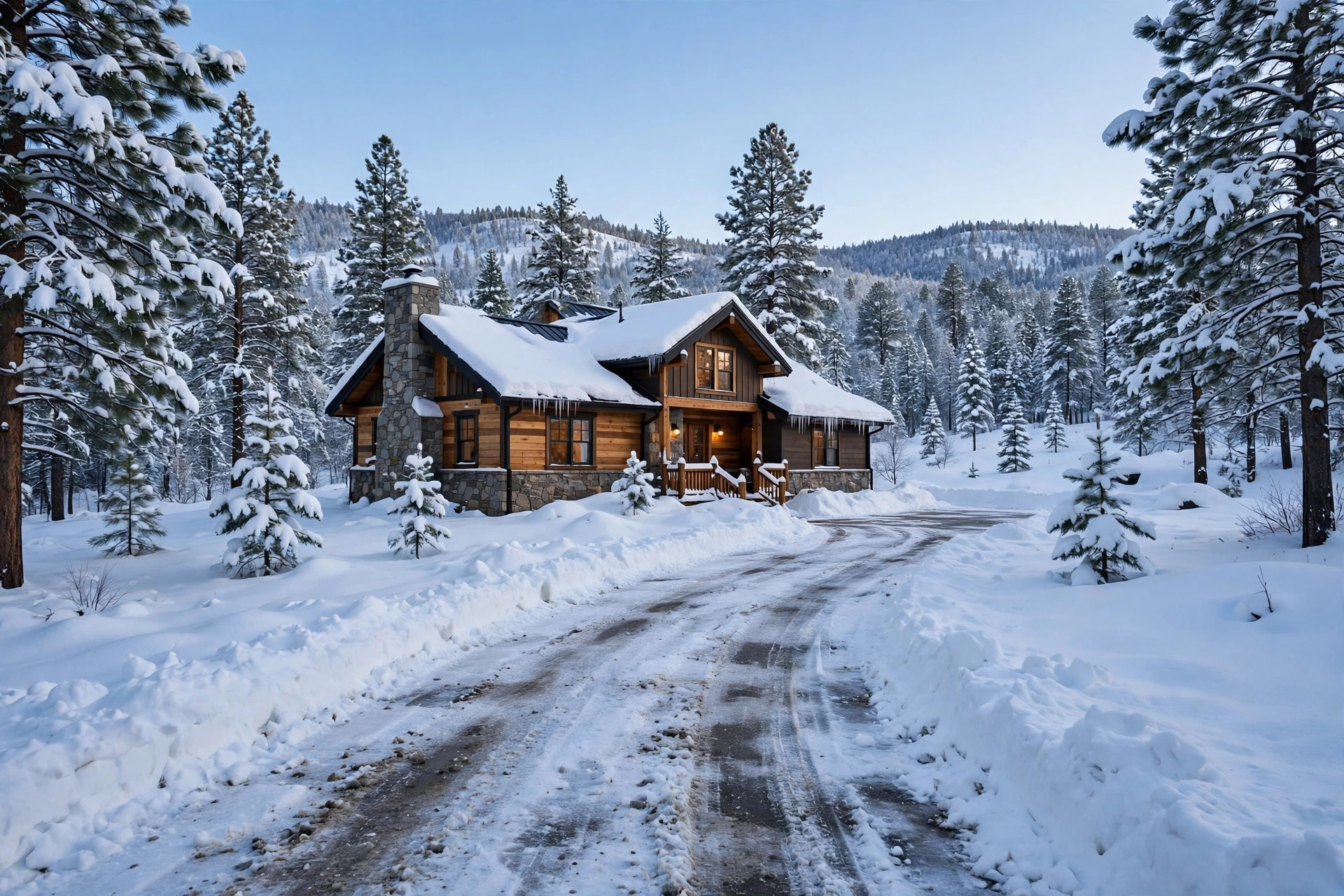
Winter second-home care in Teton Valley is not a luxury; it is the difference between a home that waits quietly for your return and a home that surprises you with a frozen pipe, a buried driveway, or a roof problem discovered too late. Teton Valley winters are long, cold, and snowy, and a home left alone through them needs a plan, not just hope.
This post covers what that plan should include: heat and pipes, roof and snow, access and plowing, and the local checks that catch small problems while they are still small. It is written for second-home owners, from the owner's side, by an Owner's Representative in Driggs, Idaho — not a builder, not an agent, and not a property manager, but the local advocate who can help you set the care system up properly.
Winter second-home care in Teton Valley starts before the first storm
The best winter care is arranged in autumn, before the first serious snow. That is when heating, plumbing, and roof systems should be checked, when the plowing arrangement should be confirmed in writing, and when someone local should know the home: where the shutoffs are, who to call, and what to check after a storm. Waiting until winter to arrange care means arranging it during the season when local help is busiest and access is hardest.
A simple autumn checklist covers most of it: heating system serviced and set to a safe, steady temperature for an empty home; pipes, hose bibs, and vulnerable runs checked and, where appropriate, insulated or drained; gutters and roof drainage clear; and a clear plan for who clears the driveway and walks, and how often. None of that is dramatic. All of it is cheaper in autumn than the repair it prevents in midwinter.
Heat, pipes, and the quiet risks of an empty home
Heat is the first winter risk, because everything else depends on it. An empty home that loses heat does not just get cold; it risks frozen pipes, and a burst pipe in an empty home can run for days before anyone notices. A steady, monitored temperature, a heating system that has actually been serviced, and a local check after a cold snap are the basic defences. If your home has connected-home monitoring, temperature alerts are worth more in winter than almost any other sensor — they turn a silent failure into a phone call.
Pipes deserve the same attention. Know which runs are most exposed, especially in garages, crawl spaces, and exterior walls, and make sure they are insulated or protected. Know where the main water shutoff is, and make sure your local contact knows too, so a leak can be stopped in minutes rather than days. Small, boring preparation is what winter care mostly is, and it is what separates a home that survives winter from one that merely endures it.
Snow, roofs, and access: the Teton Valley specifics
Snow load is a Teton County reality, not an abstraction. Roofs here are designed for heavy snow, and that design depends on the building code and snow load requirements that apply to your specific site and elevation — requirements that vary and must be confirmed with the county and a licensed engineer for your home, not guessed from a neighbouring property. As an owner, your job is not to calculate the load; it is to make sure the home was built to the right standard, that roof drainage works, and that someone local is watching for ice dams, blocked vents, and snow accumulation in the places it causes trouble.
Access is the other winter reality. Who plows your driveway, and when? Is the road to your home maintained and plowed by the county, a homeowners association, or a private arrangement, and what happens in a heavy storm? A home you cannot reach is a home you cannot check, and a home whose driveway is buried is a home whose emergency access is compromised. Confirm the plowing arrangement in writing, with a named contact, before winter — and confirm what happens when the storm is bigger than usual, because in Teton Valley, it eventually will be.
How to leverage an owner's representative for winter second-home care
An owner's representative is most useful for winter care when brought in early — ideally before you buy or build, so the home is set up for winter from the start, and certainly before the first winter you spend away. A representative who knows your home from the build can set up care with knowledge no new caretaker has: where the systems are, what was built to what standard, and what to watch for on your specific lot and roof.
What to ask for is concrete. Ask for a written winter plan: heating and pipe checks, a plowing arrangement confirmed in writing, a schedule of local visits with photographs, and a clear escalation path — who is called, in what order, when something goes wrong. Ask for photo proof after each visit, so you can see the driveway cleared, the heat on, and the home dry, rather than taking it on trust. Ask for the plan to name the shutoffs, the service contacts, and the decision thresholds: at what point does your local contact call you, and at what point do they act first and report after?
What that saves you is the cost of a winter surprise. A frozen pipe, a roof leak, or a heating failure discovered in spring is not just a repair bill; it is weeks of damage, mould, and disruption that a single winter visit would have caught. It also saves leverage and time: a home with a documented care history is easier to insure, easier to sell, and easier to return to. And it saves the simplest thing of all — arriving in spring to a home that is ready, instead of arriving to a project.
A winter care calendar for a Teton Valley second home
Think of winter care as a calendar, not a single visit. In autumn, service the heating, check pipes and drainage, and confirm plowing. Through winter, schedule regular local visits with photographs, especially after heavy snow and cold snaps, and keep temperature monitoring on. In spring, walk the home properly: roof, drainage, exterior, and systems, and fix winter wear before it becomes summer damage. A home that is checked on that rhythm rarely produces a large surprise, because large surprises are almost always small problems that were left alone for months.
If you take one thing from this post, take this: winter care is not about worrying more. It is about worrying once, in autumn, by setting up a system, and then letting that system do the worrying for you all winter. A named local contact, a written plan, and photographic proof after each visit — that is the whole system, and it is enough.
Frequently asked questions
What is winter second-home care in Teton Valley?
A planned system for an empty home through a long, snowy winter: heating and pipe checks, a confirmed plowing arrangement, scheduled local visits with photographs, and a clear escalation path when something goes wrong.
When should winter care be arranged?
In autumn, before the first serious snow, when heating can be serviced, pipes checked, and plowing confirmed while access is easy and local help is available.
How can an owner's representative help with winter care?
By setting up the winter plan with knowledge of your specific home: heating and pipe checks, plowing confirmed in writing, scheduled visits with photo proof, and named shutoffs and service contacts, so problems are caught while they are still small.
When should I bring in an owner's representative for winter care?
Before the first winter you spend away, and ideally before you buy or build, so the home is set up for winter from the start. After a winter problem, a representative can still help fix the system, but the damage is already done.
What does it cost NOT to have winter care in place?
No fee is quoted here, because none is set. The cost of going without is measured in winter damage discovered late: a burst pipe that runs for days, a roof leak found in spring, or a heating failure that turns a small repair into a large one.
Talk it through before you commit. If you are looking at land, a builder, or a purchase in Teton Valley, a short conversation can save a long, expensive correction later.
(208) 932-3565 Contact on the homepage · doug@tetonproperties.com
Related guides
- Teton County building code and snow load
- Land feasibility in Teton Valley
- Owner's representative in Teton Valley
- Home care in Teton Valley for second homes