
Owner's representative in Teton Valley: what one actually does, day to day
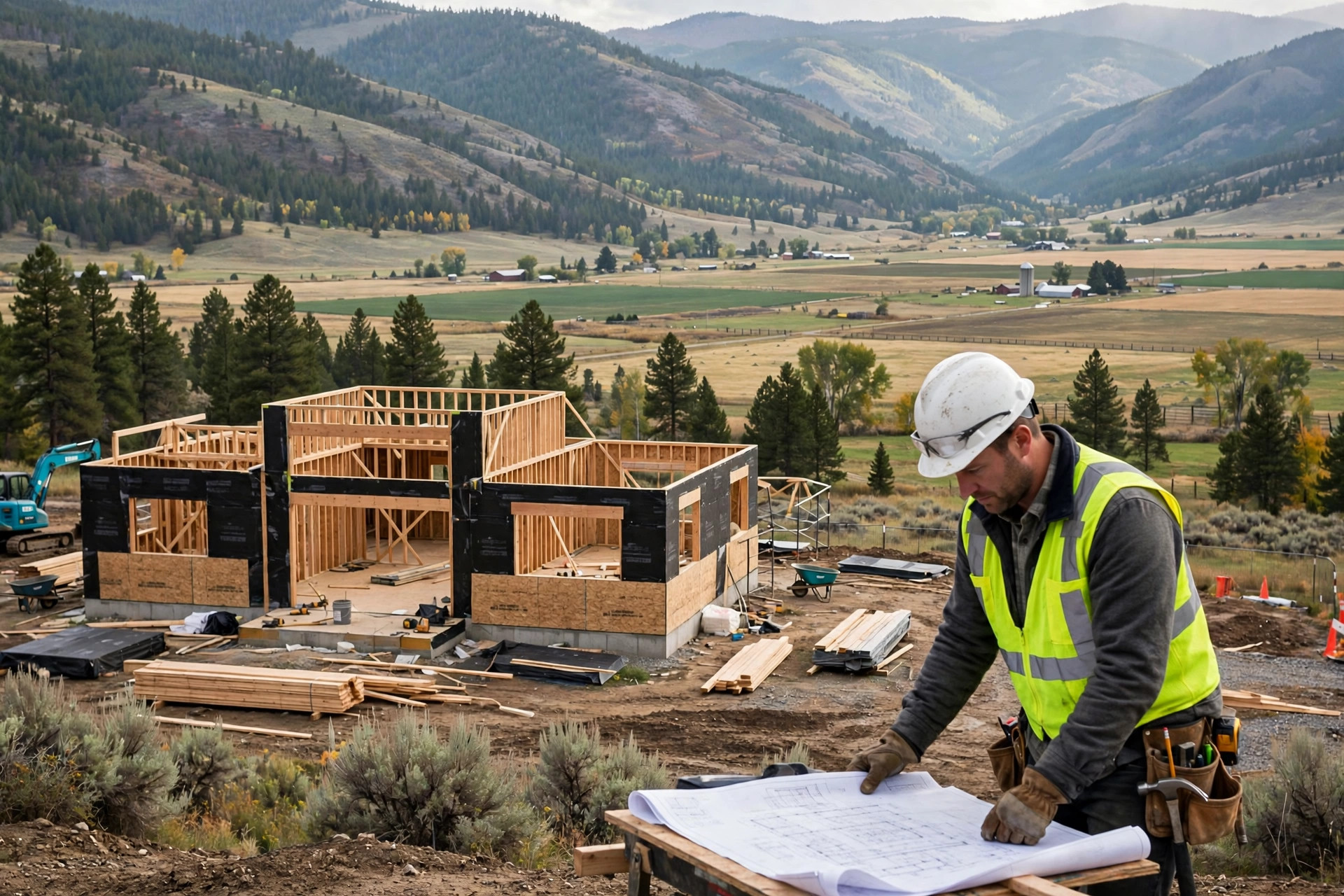
An honest note before you read further: Teton Properties is an Owner's Representative and Owner Advisor in Driggs, Idaho. We are not a real estate agent, not a home builder, and we do not sell land or list properties for sale. A licensed realtor handles any land or home purchase, and licensed, insured builders build. Our role is to stand only for you, the owner — before you buy, while you build, and after you move in or start using a second home.
An owner's representative in Teton Valley is the person who stands only for you, the owner, on a build where you cannot stand there yourself. That sounds simple, and it is — but the day-to-day work behind it is where the value lives. This post explains, in plain terms, what that work actually looks like from the first lot walk to the final walkthrough, and how to leverage it well.
Teton Properties is an Owner's Representative and Owner Advisor in Driggs, Idaho. We are not a real estate agent, not a home builder, and we do not sell land. A licensed realtor handles any purchase, and licensed, insured builders build. Our job is different: we are paid only by you, so our only interest is yours — the right lot, the right builder, the right price, and a home built the way it was promised.
Owner's representative in Teton Valley: the role in one paragraph
An owner's representative in Teton Valley is your local advocate and project watchdog. We check the lot before you buy it, compare builder bids apples to apples, review change orders before you approve them, track budget and schedule against what was promised, and report to you with photographs and plain language. We do not design the home, we do not pour the concrete, and we do not sell you anything. We make sure the people who do those things do them well, on your behalf, and that you always know where things stand.
That independence is the whole point. A builder's representative works for the builder. A realtor's job ends, in most cases, when the purchase closes. An owner's representative works for you from before the purchase through the build and into the care of the finished home, and is paid only by you. When a question comes up — is this change order fair, is this delay reasonable, is this bid complete — you have someone local, on your side, whose answer is not shaped by a commission or a construction margin.
What an owner's representative does before you buy
The most valuable work often happens before you own anything. It starts with land feasibility: can this lot support the home you want, what services are actually available, how does winter access work, what do the covenants and county rules allow, and what will site work really cost? A lot that looks perfect in summer can hide a long power run, a difficult septic design, or a restriction that blocks the home you planned. Finding that out before you offer, or during a contingency period your realtor negotiates, is worth far more than finding it out after closing.
Feasibility also shapes the build itself. The lot decides the driveway, the drainage, where snow goes off the roof, and where a home can sit. A representative who has walked the lot and read the rules can tell you, in writing, whether your plan fits the land — and if it does not, what would have to change. That is not a sales report. It is a decision document, and walking away from the wrong lot on the strength of it is a successful outcome, not a failure.
How to leverage an owner's representative: what Doug actually does for you
Leveraging an owner's representative starts with timing: bring one in before you buy land or sign with a builder, not after problems start. Once a lot is closed and a builder contract is signed, many of the most expensive decisions are already locked in. Before those moments, a representative can still change the outcome — a different lot, a renegotiated price, a bid comparison that reveals a missing allowance, a contract clause that protects you on changes and delays.
What to ask for is specific. Ask for a feasibility report in writing before you commit to a lot. Ask for an apples-to-apples bid comparison that lines up allowances, exclusions, and scope, so two bids that look close can be compared fairly, line by line. Ask for change-order review before you approve anything, so you are not paying twice for work already included or paying a premium for a small change. Ask for budget and schedule tracking against the original plan, and for photo updates after site visits, so you can see progress from far away instead of relying on summaries alone.
What that saves you is not abstract. One missed allowance, one duplicate change order, or one lot problem found too late can cost more than a representative's involvement many times over — and those are the quiet mistakes, the ones nobody announces. It also saves time and leverage: a builder knows the owner has a local, informed advocate reading the documents, and that alone tends to produce clearer bids, cleaner change orders, and faster answers. And it saves the thing owners mention most: peace of mind from far away, knowing someone local is watching the build as if it were their own.
What an owner's representative does during the build
During construction, the work becomes rhythm: regular site visits, photographs, and plain-language updates. Is the framing matching the plan? Is the work that was billed actually done? Are materials arriving on schedule, and if not, what is the recovery plan? Are change orders documented, priced fairly, and approved before the work starts, rather than discovered after the fact? A representative asks those questions on your behalf, in person, while the work is still visible and correctable.
The reporting matters as much as the visiting. A good update tells you what was done, what is next, what is behind or ahead, what it costs against budget, and what needs your decision — with photographs to prove it. It does not bury problems in jargon or wait until a small issue becomes a large one. If a decision is yours to make, it should reach you early, with the options and the cost of each, so you can decide calmly instead of under a deadline the builder set.
After the build: handover, punch list, and care
At the end of a build, an owner's representative helps you close the loop properly: a thorough walkthrough, a punch list that is actually completed, warranties and documents handed over in order, and a clear record of what was built, where, and by whom. That record matters later, when you need a repair, a warranty claim, or a second-home care visit, because it answers questions without guesswork.
After handover, the role can continue into home care: a local contact who knows your home, checks it on a schedule, and reports with photographs. That continuity — the same person who watched the build now watching the home — is one of the quiet advantages of having a representative in the first place. The build ends, but the home, and the need for someone local you trust, does not.
Frequently asked questions
What is an owner's representative in Teton Valley?
A local advocate paid only by the owner, who checks feasibility before purchase, compares builder bids, reviews change orders, tracks budget and schedule, and reports with photographs and plain language — from the owner's side only.
When should I bring in an owner's representative?
Ideally before you buy land or sign with a builder. That is when feasibility, bid comparison, and contract review can still change the outcome. Bringing one in after problems start still helps, but it helps less, because the expensive decisions are already made.
How do I leverage an owner's representative well?
Ask for specific deliverables: a written feasibility report, an apples-to-apples bid comparison, change-order review before approval, budget and schedule tracking, and photo updates after site visits. The more specific the ask, the more useful the work.
What does it cost NOT to have an owner's representative?
No fee is set or quoted here, because Teton Properties does not publish a fee for this service. The cost of not having one is measured in mistakes that go uncaught: a lot problem found after closing, a bid gap discovered mid-build, or a change order paid twice. Those mistakes are often far more expensive than the advocacy that would have caught them.
Is an owner's representative the same as a builder or a realtor?
No. A builder builds, a licensed realtor handles the purchase, and an owner's representative stands only for the owner. Those roles are separate on purpose, so no one is advising you while also being paid by the other side of the deal.
Talk it through before you commit. If you are looking at land, a builder, or a purchase in Teton Valley, a short conversation can save a long, expensive correction later.
(208) 932-3565 Contact on the homepage · doug@tetonproperties.com
Related guides
- Land feasibility in Teton Valley
- Home builders in Teton Valley: compare the bids
- Cost to build in Teton Valley
- Build with an Owner's Representative in Teton Valley